
Posted by Pam on 22nd Jul 2026
Why Non-Foaming Cleansers Work, And Should You Make the Switch
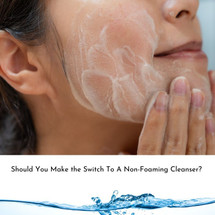
There is a reason we have been trained to associate lather with "clean." A rich foam can feel satisfying, as though it is washing away the day’s buildup. It is a powerful sensation; however, that sudsy sensation is often doing more than removing dirt and oil, but it's also removing something skin needs to stay healthy.
If you have ever finished washing your face and felt that tight, squeaky-clean sensation, that is the moment your skin's natural barrier got a little too much help "cleaning up."
What's Really Happening When Foaming Bubbles Your Face
Lather in most cleansers comes from sulfates or other harsh surfactants. These are ingredients engineered to strip oil efficiently, plus they contain serious fragrances which don’t help, but tamper down the chemical scents. Yes, they are effective, but not selective. Along with makeup, sweat, and excess sebum, they also break down the lipid barrier that keeps moisture locked in and irritants locked out.
For some skin types, this barely registers. For sensitive, dry, or mature skin, it can mean redness, tightness, or the rebound effect. This rebound is where skin overproduces natural oils to compensate for what was stripped away.
The Case for Lotion-Based, Soap-Free Cleansing
Non-foaming cleansers work on a different principle entirely. Rather than dissolving oil through harsh detergency, lotion-based formulas use gentler emulsifiers and botanical oils to lift impurities away. This is closer to how oil cleansing works, but unlike oil this cleanser is formulated to easily rinse clean.
Because they do not disrupt the skin's natural pH as aggressively, non-foaming cleansers tend to be pH-balancing rather than pH-disrupting. That matters more than it sounds: healthy skin sits in a mildly acidic range, and that acidity is part of what keeps bacteria and environmental stressors in check. Every time a high-pH, foaming cleanser resets that balance, your skin must work to recover it.
Where Balm of Gilead Comes In
The most interesting ingredients in gentle cleansing do not come from a lab. They come from the wild. Balm of Gilead buds, traditionally hand-harvested in Alaska, and an island off the coast of Washinton state. These buds contain naturally occurring salicylic compounds. Used in a cleanser, they offer a mild clarifying effect on the skin without the drying aftermath typical of conventional acne washes or foaming salicylic acid products.
Paired with botanical extracts like burdock and sage, the result is a formula that clarifies and softens at the same time. This is something that most foaming cleansers rarely manage together.
Who Benefits Most from Switching
- Sensitive skin: This option avoids sulfates and synthetic fragrance, which is most likely to trigger a reaction.
- Mature skin: Necessary for preserving natural oils that naturally thin with age.
- Oily skin: That harsh feeling commercial cleansers aren’t balancing oil production, but rather stripping it, which can trigger more oil in response.
- Dry or normal skin: A non-forming cleanser maintains hydration through the cleansing step itself, not just in the moisturizer after
Making the Switch
If you are used to foam, a lotion cleanser can feel unfamiliar at first, because there's no big sudsy payoff. But give it a week. Most people notice less tightness, more softness, less redness, and skin that feels genuinely balanced rather than stripped and re-moisturized.
A simple routine: massage a small amount into damp skin for about a minute, morning, and evening, then rinse with lukewarm water. No scrubbing is required. This Gentle Cleansing, No-Soap formula does work.
Curious about the ingredients behind our approach to gentle cleansing? Explore our Gentle Cleansing Lotion, formulated with wild-crafted Balm of Gilead, Burdock, and pure Clary Sage essential oil.